
Austin News That Every Visitor Should Know
Austin blends live music, outdoor recreation, creative culture, and distinctive food traditions into one of the most recognizable city identities in the United States. Known as the “Live Music Capital of the World,” Austin supports hundreds of music venues and hosts internationally known festivals such as SXSW and the Austin City Limits Music Festival.
Visitors will also encounter a thriving food truck scene, outdoor attractions like Lady Bird Lake and Zilker Park, and cultural landmarks including the Texas State Capitol. Planning ahead—especially for reservations at popular natural areas such as Hamilton Pool Preserve or timing a visit to see the Congress Avenue Bridge bats—can help make the most of a trip.
The sections below highlight essential experiences and practical details visitors should know before exploring Austin.
Live Music Venues and Major Austin Festivals
Austin’s music scene operates at an unusually large scale, with hundreds of venues hosting live performances throughout the week across the city.
Historic locations such as Antone’s Nightclub, known as a cornerstone of Austin blues since the 1970s, and The Continental Club, a South Congress staple since 1955, helped shape the city’s music identity. Other respected venues include The Saxon Pub, a longtime listening room for singer-songwriters, and clubs throughout the Red River Cultural District.
The city adopted the nickname “Live Music Capital of the World” in 1991, recognizing the unusually high concentration of music venues and performances.
Austin also hosts globally recognized festivals. South by Southwest (SXSW) brings together music, film, and technology events each spring, while the Austin City Limits Music Festival draws large crowds to Zilker Park every fall.
Together, these events and venues reinforce Austin’s reputation as one of the most influential music destinations in the United States.
Austin BBQ, Tex-Mex, and Food Truck Culture
Austin’s culinary identity combines Central Texas barbecue traditions, Tex-Mex restaurants, and a large food truck scene that has become part of the city’s culture.
Well-known barbecue restaurants across the city serve smoked brisket, ribs, and sausage prepared in the Central Texas style, where meat is seasoned simply and cooked slowly over wood.
Food trucks also play a major role in Austin dining. The city is home to hundreds of licensed food trucks, many operating in small clusters or food trailer parks throughout the city.
One example is The Picnic, located near Barton Springs Road, which features several permanent food trailers serving cuisines ranging from tacos and barbecue to international street food.
Other locations across Austin host rotating food trucks, creating casual outdoor dining environments where visitors can sample a variety of dishes in one stop.
Lady Bird Lake and Zilker Park Outdoor Activities
Outdoor recreation is central to Austin’s lifestyle, and Lady Bird Lake and Zilker Park form one of the city’s most popular activity hubs.
The Ann and Roy Butler Hike-and-Bike Trail runs roughly 10 miles around Lady Bird Lake, offering a scenic path for walking, jogging, and cycling with views of the downtown skyline.
Because motorized boats are restricted, the lake has become a favorite destination for kayaking, canoeing, and stand-up paddleboarding. Rental locations such as Texas Rowing Center and The Rowing Dock provide equipment for visitors exploring the water.
Nearby Zilker Park hosts festivals, picnics, sports fields, and the famous Barton Springs Pool, a spring-fed swimming area that remains about 68–70°F year-round.
Other nearby parks, including Auditorium Shores and Festival Beach Park, provide additional green space and lake access.
Day Trips from Austin: Hamilton Pool and Enchanted Rock
Visitors looking for outdoor adventures beyond the city often head to Hamilton Pool Preserve or Enchanted Rock State Natural Area, two of the most popular day trips from Austin.
Hamilton Pool Preserve, located about 23 miles west of Austin, features a natural limestone grotto and turquoise swimming hole formed by the collapse of an underground river dome thousands of years ago. Reservations are required for entry, and swimming availability depends on water quality conditions.
The trail to the pool is roughly 0.25 miles each way, though the rocky terrain requires careful footing.
Further west near Fredericksburg, Enchanted Rock State Natural Area offers hiking across a massive pink granite dome rising above the Hill Country. The park’s summit trail provides panoramic views and is a favorite for hikers and photographers.
Both locations require advance planning, especially during busy seasons, as visitation limits help protect the natural environment.
Free Tours at the Texas State Capitol and History Museums
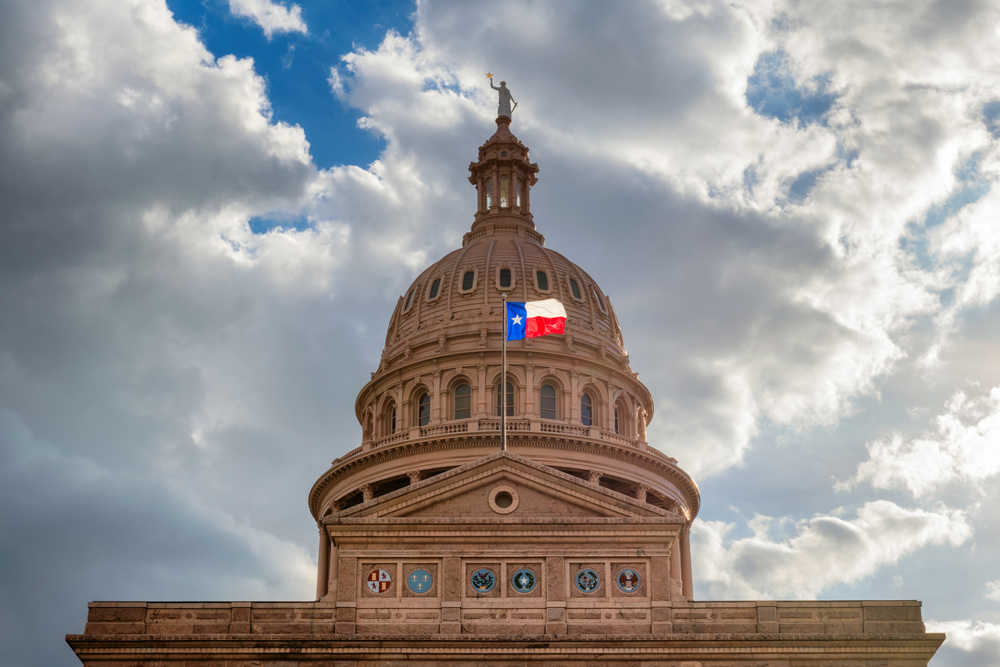
The Texas State Capitol is one of Austin’s most significant historic landmarks and offers free guided tours for visitors interested in Texas history and government.
Completed in 1888, the building stands 308 feet tall, making it taller than the U.S. Capitol in Washington, D.C. Its Renaissance Revival architecture, pink granite exterior, and historic legislative chambers make it one of the most impressive capitol buildings in the country.
The surrounding 22-acre Capitol grounds feature monuments honoring notable moments in Texas history.
Nearby museums expand on the story of Texas and Austin. The Bullock Texas State History Museum offers interactive exhibits and an IMAX theater, while the Texas Capitol Visitors Center provides additional historical information about the building and state government.
South Congress Street Art and Austin Murals
Austin’s creative culture is visible throughout the city in the form of murals and public art installations.
One of the most famous murals is the “I Love You So Much” wall at Jo’s Coffee on South Congress Avenue. Another well-known artwork is the “Greetings from Austin” postcard mural located at 1720 South 1st Street, which celebrates Austin landmarks in vintage postcard style.
Murals appear throughout neighborhoods such as South Congress, East Austin, and downtown, where local artists have turned building walls and alleyways into colorful community art.
Visitors can explore these murals independently or join guided mural walking tours that highlight the stories behind Austin’s public art scene.
E-Bike Tours and Food Walking Tours
Guided tours offer another way to experience Austin’s major attractions while learning about the city’s history and culture.
Electric bike tours allow visitors to explore downtown, the University of Texas campus, and popular mural locations with minimal effort. Many tours last two to three hours and include stops at major landmarks such as the Texas State Capitol, Lady Bird Lake, and historic Sixth Street.
Food-focused walking tours are also popular, introducing visitors to Austin’s barbecue, tacos, and local specialties while exploring neighborhoods like downtown and East Austin.
These tours combine sightseeing with food tastings and provide helpful local insights for visitors discovering Austin for the first time.
Austin Nightlife Districts: Sixth Street and Rainey Street
Austin’s nightlife centers around several well-known entertainment districts.
Sixth Street, particularly East Sixth Street between Congress Avenue and Interstate 35, is famous for its dense concentration of bars, music venues, and restaurants. Portions of the street are often closed to traffic on weekend nights to create pedestrian-focused nightlife blocks.
Just southeast of downtown, Rainey Street offers a different atmosphere with bars and restaurants operating in converted early-20th-century houses. Outdoor patios, lawn games, and live music create a more relaxed nightlife environment.
Both districts contribute to Austin’s reputation for live music, nightlife, and social energy.
Family-Friendly Austin: Zoos, Gardens, and Parks
Austin also offers numerous family-friendly attractions that highlight nature, science, and outdoor exploration.
The Austin Zoo & Animal Sanctuary focuses on caring for rescued animals and educating visitors about wildlife conservation.
The Lady Bird Johnson Wildflower Center, part of the University of Texas at Austin, showcases native Texas plants and gardens designed to support pollinators and wildlife.
Families also enjoy Barton Springs Pool, located in Zilker Park, where the spring-fed water remains cool year-round.
Another popular destination is the Thinkery, Austin’s children’s museum featuring interactive exhibits focused on science, engineering, and creativity.